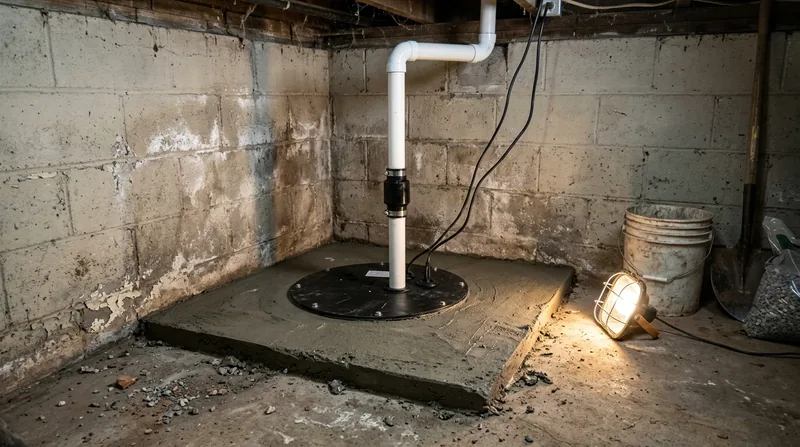




If you have ever stood in a wet basement after a Mahoning Valley thunderstorm, you already know why sump pump installation and replacement in Youngstown is not a job to postpone. This city sits in a valley of dense glacial till clay that drains slowly, and the sandstone ledges along the Mill Creek gorge push groundwater sideways into foundations instead of letting it soak away. The 1890s Tudor and Colonial Revival homes around Wick Park and Mill Creek Park sit on sandstone and brick foundations with original footing drains that are now a century old. North Side foursquares and steel-era frame homes on the South Side and Brier Hill have full basements that collect every spring snowmelt. Boardman, Austintown and Struthers brick ranches on block basements need a pump that can keep up with summer storms, and the newer poured-concrete basements in Canfield, Poland and Howland still need a properly sized pit and a discharge line that actually carries water away from the house. We install and replace sump pumps built for that exact set of conditions. Start with a free basement inspection and we will tell you plainly whether your pump is undersized, your basin is unsealed, or your discharge is dumping water right back against the wall.
Why Sump Pump Failure Hits Youngstown Basements Harder Than Most
The failure mode that dominates here is not a slow seep. It is a pump that quits during the exact week it is needed most, when a hard freeze-thaw cycle loosens the soil, a heavy spring snowmelt saturates the glacial clay, and a summer thunderstorm dumps two inches in an hour. A pump that ran fine in February can be dead by April, and the water table under a North Side basement rises fast when the ground cannot drain.
- Clay soil around Austintown and Boardman holds water against the foundation long after the rain stops, so the pump cycles for days instead of hours.
- Old brick and sandstone foundations near Mill Creek Park wick water inward, and a weak pump lets the basin overflow into the floor drain.
- Cast-iron or undersized discharge lines in 1940s and 1950s Capes freeze at the exterior wall and back water into the pit.
- Unsealed basins in 1980s and 1990s Canfield and Howland homes let soil gas and debris in and shorten pump life.
- A missing or failed check valve lets every cycle drain back into the basin, so the pump runs twice as often as it should.
Any one of these turns a wet basement into a recurring problem, and the fix is usually a correctly sized pump, a sealed basin and a discharge line routed to daylight or a dry well, not a bigger pump bolted onto the same old plumbing.
Key info: A home on the South Side near Brier Hill with a 60-year-old cast-iron discharge that exits two inches above grade will send that water straight back down the wall. We see this on nearly every replacement call in that part of the city.
Ohio does not license sump pump installers as a separate trade, but any contractor working on your foundation or altering how the discharge ties into the sanitary system should be checked against local requirements. Confirm the current rules with the City of Youngstown building department before work begins, because thresholds vary by jurisdiction and the inspector has the final word.
How We Install or Replace a Sump Pump in Youngstown, Step by Step
We start by finding out where the water is actually coming from, because a pump that fights hydrostatic pressure from a failed footing drain will burn out no matter how many times it is replaced. On a Brier Hill or North Side full basement, that often means checking the interior perimeter drain before we touch the pit. If the drain tile is collapsed, the right answer is a new interior drain tile system feeding a new basin, not a larger pump in the same dead pit.
- We inspect the basement, the pit and the discharge route, and we measure how much water the foundation actually takes during a storm.
- We size the pump to the basin volume and the inflow, typically a 1/3 to 1/2 HP cast-iron or stainless pump for a residential basement in this climate.
- We cut and set a new sump basin, seal the lid, and install a check valve and a discharge line pitched correctly to daylight or a dry well.
- We route the discharge well away from the foundation and extend downspouts so roof water never lands in the same spot.
- We test the pump under load, confirm the float and switch, and walk you through what a normal cycle should sound like.
If your existing pit and drain are sound, a straight pump and discharge replacement is a half-day job. If the pit is undersized or the drain tile is failing, we tell you before we start, not after.
Key info: A 1950s ranch in Struthers had a 12-inch basin and a 1/4 HP pump that tripped its breaker every spring. We set a 24-inch sealed basin, a 1/2 HP pump and a new 1.5-inch discharge to a dry well, and it has kept up with every snowmelt since. See how that work fits with a full interior drain tile system when the drain itself is the problem.
Sump Pump Approaches We Use in Youngstown
Not every basement needs the same setup. A 1920s Tudor near Wick Park with a stone foundation and a shallow pit is a different job from a 2010 two-story in Canfield with a poured wall and a factory pit. We match the approach to the house, the water volume and the discharge options on the lot.
| Approach | Description | Best for |
|---|---|---|
| Direct pump replacement | Swap the pump and check valve in an existing sound basin. | Pit and drain are in good shape, pump has simply failed. |
| New basin and pump | Cut a properly sized sealed basin, set a new pump and discharge. | Undersized or unsealed pit, or no pit at all. |
| Pump plus discharge correction | New pump with a re-routed line to daylight or a dry well. | Water is being dumped back against the foundation. |
| Pump with battery backup | Primary pump plus a battery backup pump on the same basin. | Storm-season power outages are a real risk on your block. |
| Pump feeding a new drain tile | New interior perimeter drain tied into a new basin and pump. | Collapsed footing drain and hydrostatic pressure at the wall. |
Sump Pump Installation & Replacement Cost in Youngstown: What to Expect
Most homeowners in Youngstown want a straight number before they book, and that is fair. A basic pump and check valve replacement in an existing sound basin starts from $1,200, and the figure moves from there based on what we actually find in the pit. A new sealed basin, a longer discharge run to daylight, or a battery backup unit each add to the job, and none of them are guesses once we have seen the basement.
What moves the price most is the condition of what is already there, not the pump itself. A 1940s Cape in Boardman with a shallow pit and a rusted discharge line takes more labor than a 2015 home in Poland with a factory basin and a clean route to the yard. Access matters too: a finished basement with a tight mechanical closet is slower to work in than an open North Side basement.
We recommend getting two or three estimates and asking each contractor to explain the pump size, the basin type and where the discharge will land. A quote that does not mention the discharge route is not a complete quote. You can see how our numbers break down on the full pricing page before you call.
Hiring a Sump Pump Contractor Near Me in Youngstown: What to Check
You want a contractor who works on basements and foundations every week, not a general handyman who will drop a pump in the old pit and leave. Ask what happens if the new pump cannot keep up, and get the answer in writing. A dedicated basement waterproofing specialist will also tell you when the pump is not the real problem.
- Confirm the company carries liability insurance and workers compensation, and ask for a certificate before work starts.
- Get two or three written estimates that list the pump model, basin size and discharge destination, not just a lump sum.
- Ask for local references from jobs in Youngstown, Boardman or Austintown and call at least one of them.
- Ask whether a permit is required for your scope and who pulls it, since rules vary by jurisdiction and the building department decides.
- Check for a written transferable warranty on the pump and the installation, and read what it actually covers.
If a contractor cannot answer those questions on the first call, keep looking. You can reach us directly through the contact page and we will walk you through the same checklist for your house.
One more thing worth saying plainly: a sump pump is the last line of defense, not the whole system. If water is coming through the wall itself, the pump will run forever and the wall will keep weeping. That is a different repair, and we will point you to foundation crack repair rather than sell you a bigger pump you do not need.
Sump Pump Installation & Replacement in Youngstown: Pricing Guide
| Service | Price | Details |
|---|---|---|
| Pump replacement in existing basin | Starting at $1,200 | New pump and check valve installed in a sound existing basin, tested under load. |
| New basin and pump installation | Starting at $1,850 | Cut and set a sealed sump basin, new pump, check valve and discharge line. |
| Pump with battery backup | Starting at $2,400 | Primary pump plus battery backup on the same basin, wired and tested together. |
| Pump with discharge correction | On estimate | Re-routing a discharge to daylight or a dry well depends on lot slope and distance. |
| Travel | Included | In Youngstown and surrounding areas, no separate call-out or mileage fee. |
| Estimate | Free | Response within 24h at (234) 230-7202, no obligation to book. |
Indicative pricing, the exact cost depends on square footage, finish, and site access. Free personalized estimate within 24h at (234) 230-7202.


