The Geology Under Your Feet: Why Youngstown Clay Soil Is Different
If you live in the Mahoning Valley, the ground beneath your home is not ordinary dirt. It is the legacy of glaciers that retreated thousands of years ago, leaving behind dense deposits of glacial till and clay. This Youngstown clay soil is incredibly fine-grained, which means it holds water like a sponge and drains very slowly. During a wet spring, that clay can stay saturated for weeks, keeping constant hydrostatic pressure against your foundation walls.
What makes this clay even more troublesome is how it behaves when water content changes. In dry summers, clay shrinks and pulls away from foundation walls, creating gaps where water can pour in. When the rains return, it swells back up with tremendous force. This cycle of expansion and contraction is a leading cause of soil movement around homes in Youngstown, and it is why so many basements here develop cracks, bowing walls, and persistent seepage that homeowners in sandier regions never deal with.
Lake-Effect Snow and the Snowmelt Basement Leak Problem
Anyone who has spent a winter here knows that lake-effect snow is part of life. Storms rolling off Lake Erie can dump a foot or more of snow in a single night, and that snow does not simply disappear. It sits against your foundation, melts slowly during thaws, and sends a steady stream of water into the soil. This is the classic snowmelt basement leak scenario: the ground is still partially frozen, so meltwater cannot soak downward and instead runs along the surface or through the thawed top layer right toward your foundation.
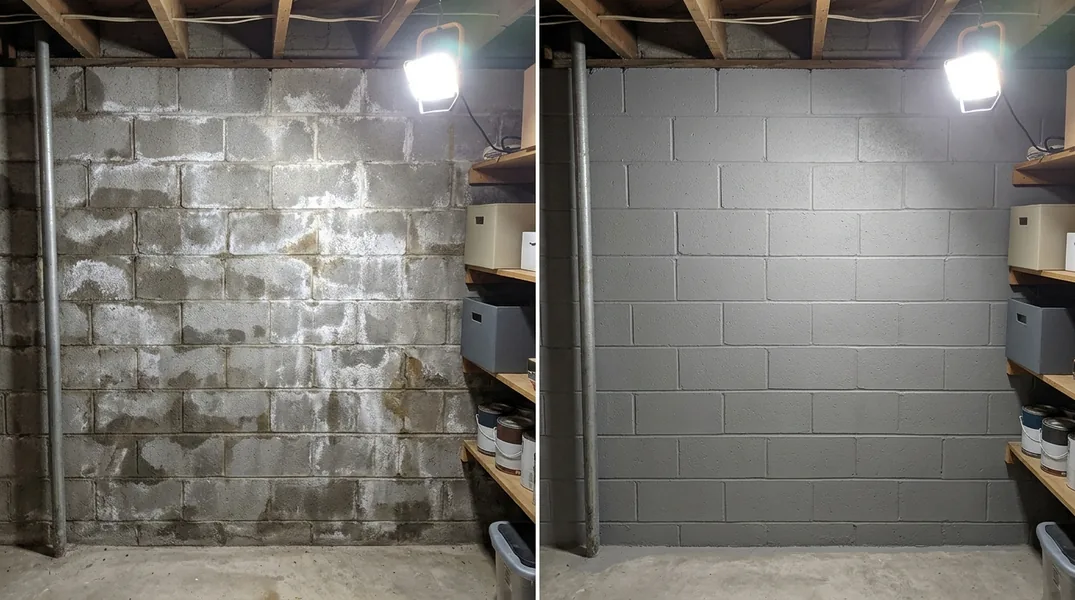
The result is that many Mahoning County basement leaks happen in February and March, not during summer thunderstorms. Homeowners often find water appearing along the base of the wall or seeping through floor cracks after a warm spell, and they are confused because it is not even raining. If you have noticed dampness, efflorescence (the white powder on concrete), or a musty smell each spring, the snowmelt cycle is likely the culprit. Understanding this seasonal pattern is the first step toward solving it, and a professional assessment of your drainage and foundation can confirm exactly where the water is entering.
Clay Soil Foundation Seepage: How Water Finds Its Way In
When clay soil stays saturated, water does not need a visible crack to get inside. It moves through the porous concrete of your foundation walls and through the cove joint, the seam where the wall meets the floor. Over time, hydrostatic pressure from the swollen clay can widen hairline cracks, push block walls inward, and even cause the floor to heave. This is genuine clay soil foundation seepage, and it tends to get worse each year if it is not addressed.
Older homes in neighborhoods throughout the valley often have no footing drain at all, or a drain that has long since clogged with silt. When that happens, water has nowhere to go but into your basement. The fix depends on the source of the problem. Sometimes the answer is an Interior Drain Tile System that captures water at the cove joint and routes it to a sump pump. In other cases, Exterior Basement Waterproofing is the better approach, sealing the outside of the wall and restoring drainage before the water ever reaches the foundation. A thorough inspection determines which strategy fits your home, your soil, and your budget.
Signs Your Mahoning County Basement Leaks Need Professional Attention
Not every damp basement is an emergency, but some warning signs should never be ignored. Horizontal cracks in a block wall, walls that are visibly bowing inward, or doors and windows that suddenly stick can all point to serious soil pressure that needs immediate attention. Water pooling on the floor after a thaw, rust stains at the base of a furnace, or a persistent musty odor are also strong indicators that Mahoning County basement leaks are actively damaging your home's structure and air quality.
The good news is that Basement Waterproofing has come a long way from the old days of patching cracks with hydraulic cement and hoping for the best. Modern systems address the water at its source, manage hydrostatic pressure, and keep the space dry through every freeze-thaw cycle the valley can throw at it. If you are unsure whether your situation warrants a visit, a quick phone call to (234) 230-7202 can help you decide. Many homeowners wait too long, and what starts as a small seep becomes a finished-basement disaster.
Basement Waterproofing Near Me: Finding the Right Local Expert
Searching for basement waterproofing near me in the Mahoning Valley returns plenty of options, but not all of them understand local soil conditions. A contractor from outside the region may not appreciate how aggressive the clay here can be or how the lake-effect snow cycle changes the timing of leaks. You want a company that has worked on homes in Boardman, Austintown, and Canfield and has seen firsthand how these soils behave through all four seasons.
Proper Foundation Waterproofing starts with a real diagnosis, not a sales pitch. Ask questions about how the contractor plans to handle drainage, whether they will address both the interior and exterior where needed, and what kind of warranty backs the work. A local specialist should be able to explain exactly why your basement is leaking based on the grade of your yard, the age of your foundation, and the direction of water flow during snowmelt. That kind of expertise is worth more than the lowest bid.
Basement Waterproofing Cost in Youngstown: What to Budget
Homeowners often ask what waterproofing will cost before they understand what is causing the leak, and that is understandable. The honest answer is that pricing depends on several factors: the length of the foundation that needs treatment, whether interior or exterior work is required, the condition of existing drains, and whether structural repairs like wall bracing are needed. A single crack injection is far less expensive than a full perimeter drain tile installation, so the range is wide.
What we can say is that delaying repairs almost always costs more. Water damage to finished basements, mold remediation, and structural repairs add up quickly, and they are far more expensive than preventive waterproofing. The best way to get an accurate number is to request a free estimate from a local professional who can inspect your foundation in person. Youngstown Waterproofing serves the entire Mahoning Valley, and we are happy to walk you through your options with no pressure and no obligation. Call (234) 230-7202 today to schedule your inspection and finally solve the leak for good.
Looking for a professional basement waterproofing contractor in Youngstown? Youngstown Waterproofing responds fast for all your basement waterproofing needs.
Get a Free QuoteOur services: Basement Waterproofing · Interior Drain Tile System · Exterior Basement Waterproofing