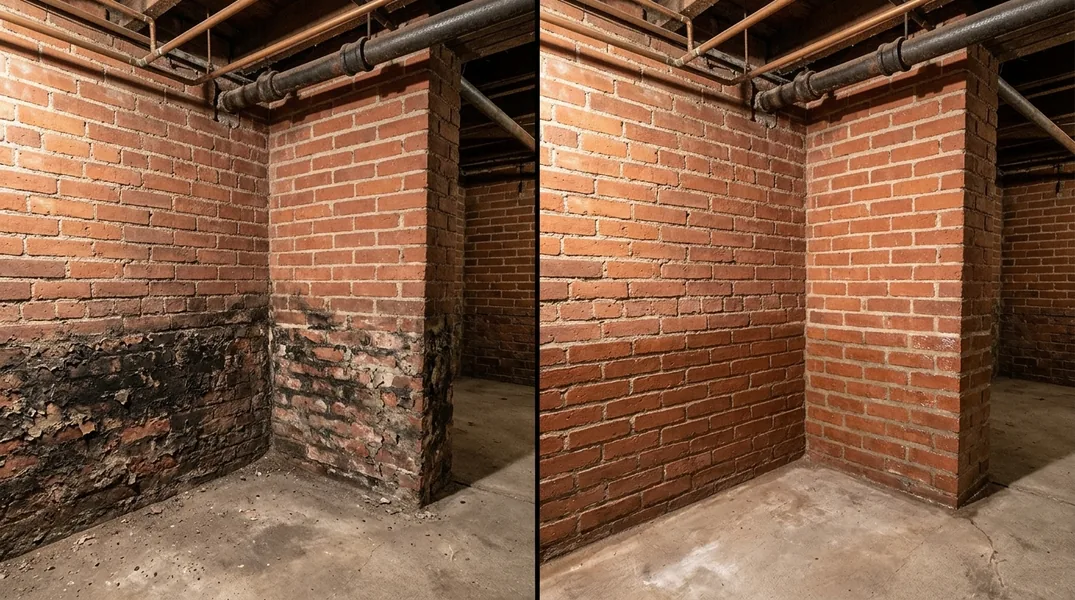
Why Youngstown Basements Face Water Problems
Homes in Youngstown sit on soils and weather patterns that keep basement waterproofing on every homeowner's radar. The region sees heavy spring rain, rapid snowmelt, and occasional summer downpours that saturate the ground faster than it can drain. Many houses here are older, with foundations that have spent decades absorbing that moisture. Add in the clay-heavy soil common around the Mahoning Valley, and you have conditions where water collects against foundation walls instead of soaking away.
That combination explains why so many local basements smell musty, show white powdery efflorescence, or develop damp patches after storms. It is rarely a single failure. Water finds the weakest point, whether that is a hairline crack, a failing cove joint, or a clogged footing drain. Understanding whether you need Basement Waterproofing from the inside or the outside starts with recognizing how water is entering and what the surrounding soil is doing. The right answer for a home in Boardman may differ from one in Canfield, which is why a site assessment matters more than a one-size-fits-all sales pitch.
Interior Drain Tile System: How It Works and When It Makes Sense
An Interior Drain Tile System is installed along the inside perimeter of the basement, usually in a trench cut into the slab or at the base of the wall. Water that seeps through the foundation or rises from below is captured by the drain tile and routed to a sump pit, where a pump discharges it away from the house. The system is typically paired with a vapor barrier and sometimes a wall drainage panel to manage humidity. Because all the work happens indoors, there is no digging up of landscaping, driveways, or patios.
For many Youngstown homeowners, interior systems are the practical choice. They address hydrostatic pressure and water that enters at the cove joint, which is extremely common in older local foundations. Installation is faster and generally less disruptive than exterior work, and it can be done year-round regardless of frost. The tradeoff is that an interior system manages water after it enters rather than stopping it at the source. It also depends on a functioning sump pump and power supply, so a battery backup is worth discussing. If your main issues are seepage at the wall-floor joint, damp walls, and a wet floor after heavy rain, an interior drain tile approach often delivers strong results for the investment.
Exterior Basement Waterproofing: Stopping Water at the Source
Exterior Basement Waterproofing tackles the problem from the outside by excavating down to the footing, applying a waterproof membrane to the foundation wall, and installing drain tile and gravel at the base. The goal is to keep water from ever reaching the wall and to relieve pressure against the foundation. This is the more direct solution when the issue is a failing exterior coating, a compromised footing drain, or soil that holds water tightly against the house. It also lets contractors inspect and repair foundation cracks from the exterior, which can matter for long-term structural health.
The obvious downside is cost and disruption. Excavation means removing decks, steps, shrubs, and sometimes sections of driveway, then restoring them afterward. It is a bigger project with a bigger price tag, and it is weather dependent. That said, for homes with bowing walls, significant exterior deterioration, or persistent problems that interior systems have not solved, exterior work can be the more durable fix. Some properties benefit from a combined approach: exterior membrane and drain tile where the source is outside, plus interior drainage to handle any water that still finds a path. A qualified contractor should explain both options honestly rather than pushing whichever is easier to sell.
Drain Tile vs Exterior Membrane: A Practical Comparison
When homeowners compare drain tile vs exterior membrane, the conversation usually comes down to where the water is coming from and how much disruption is acceptable. Interior drain tile shines at capturing water that has already entered and moving it out efficiently. It is less expensive, faster to install, and works well for the seepage and dampness that plague many older basements in the region. An exterior membrane, by contrast, is a barrier that prevents water from contacting the wall in the first place, but it requires excavation and restoration that can double the project scope.
There is also the question of foundation condition. If walls are stable and the problem is water management, interior drainage is often sufficient. If there are signs of structural movement, exterior work may be necessary to address the cause. Many homeowners also ask about Foundation Waterproofing as an umbrella term, and the honest answer is that it can include either method depending on the diagnosis. A thorough evaluation should look at grading, downspouts, soil type, crack patterns, and interior moisture readings before recommending a path. Skipping that step is how homeowners end up paying for the wrong solution.
Basement Waterproofing Cost in Youngstown: What to Budget
Cost is the question every homeowner asks, and the honest answer is that it varies with the method, the size of the basement, and the condition of the foundation. Interior drain tile systems are generally the more budget-friendly route, while exterior excavation and membrane work carry a higher price because of labor, equipment, and restoration. Homes in Austintown and across the area can see meaningful differences based on access, soil, and whether sump pump upgrades are needed. You can review general pricing guidance to get a sense of ranges, but a site visit is the only way to get an accurate number.
Be cautious of quotes that arrive without an inspection or that promise a single method for every home. A fair proposal explains what is causing the water, why the recommended system fits, and what is included in the price, such as permits, discharge lines, and warranty terms. It is also worth asking about long-term costs like sump pump replacement and electricity. Investing in the right system once is almost always cheaper than repairing a finished basement or correcting foundation damage later. A clear, written scope protects you and makes it easier to compare bids from different contractors.
Basement Waterproofing Near Me: Choosing the Right Youngstown Contractor
Searching for basement waterproofing near me in the Youngstown area returns plenty of options, and not all of them are equal. Look for a local company with a physical presence, verifiable reviews, and experience with the specific foundation types common in the Mahoning Valley. Ask how long they have worked in the area, whether they handle both interior and exterior solutions, and what their warranty covers. A contractor who only offers one method may be steering you toward what they sell rather than what your home needs.
Get more than one opinion, ask for references from nearby homeowners, and insist on a written contract that spells out the work, materials, and timeline. Confirm licensing and insurance before work begins. If you want a straightforward assessment of your options, Youngstown Waterproofing can walk you through interior versus exterior approaches and help you decide what fits your home and budget. Call (234) 230-7202 or request a free estimate to get started. A dry basement is a solvable problem when the diagnosis is right and the work is done by a team that knows the local ground conditions.
Looking for a professional basement waterproofing contractor in Youngstown? Youngstown Waterproofing responds fast for all your basement waterproofing needs.
Get a Free QuoteOur services: Basement Waterproofing · Interior Drain Tile System · Exterior Basement Waterproofing